
Some foods and drinks naturally change how the mouth feels. That does not make them bad, but it can help to know what to expect.
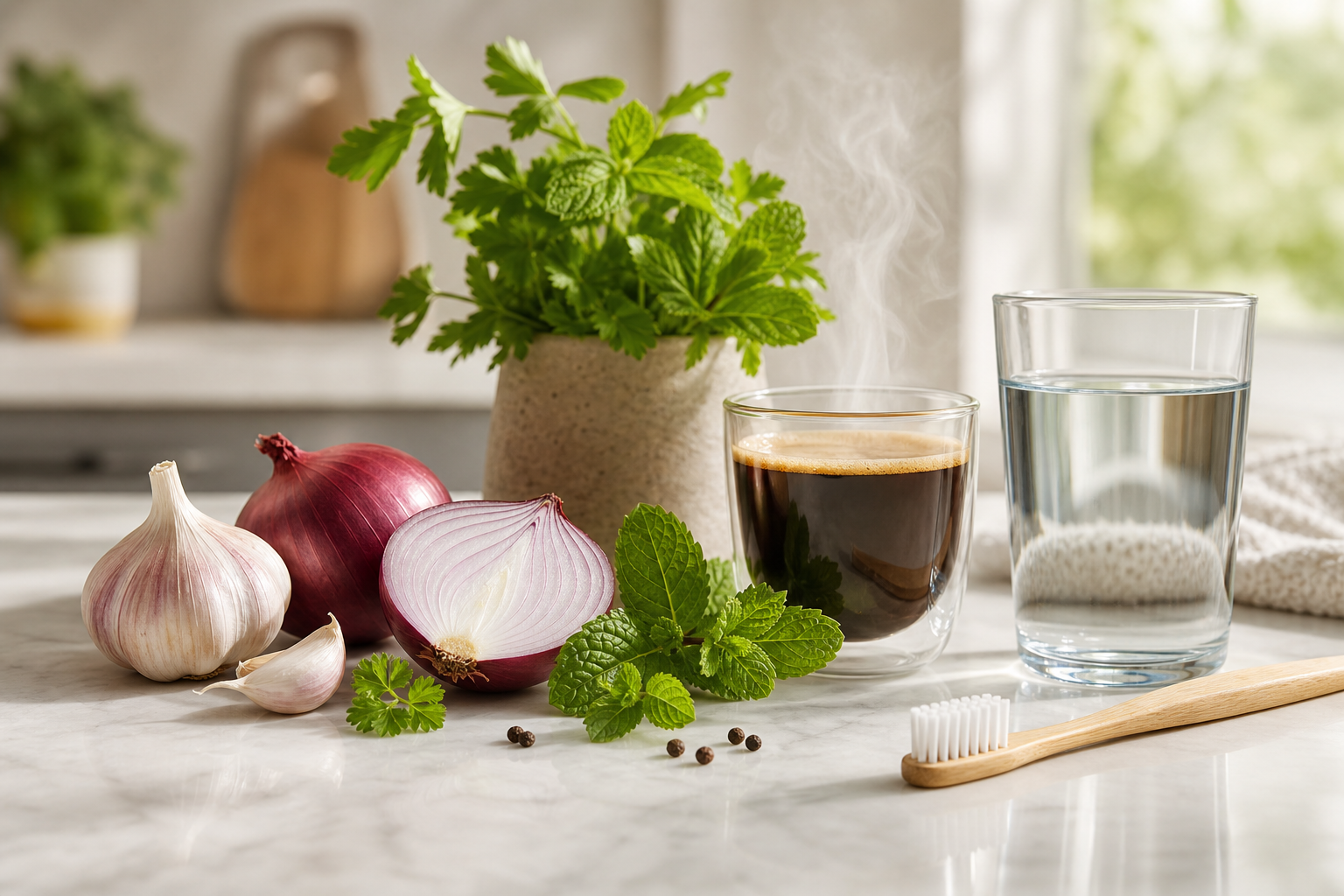
Common triggers
- Garlic, onions, coffee, alcohol, and heavily spiced meals are common examples.
- Sugary snacks and frequent sipping can also change the mouth environment throughout the day.
- Dry crackers, chips, and low-water snacks may leave the mouth feeling less fresh.
What helps after meals
Drink water, rinse gently, and return to your usual brushing and flossing schedule.
Sugar-free gum or mints may help some people feel fresher temporarily, but they are not a replacement for cleaning.
Food effects are often temporary
Many breath changes after meals are temporary. Garlic, onions, spices, coffee, and alcohol can linger because they have strong aromas or can leave the mouth feeling dry.
This is not a reason to fear normal foods. It is simply a reminder that meals and drinks interact with the mouth environment throughout the day.
Building a meal-friendly routine
Water after meals is one of the easiest habits. It helps rinse the mouth and can make the mouth feel cleaner between brushing sessions.
If you snack often, especially on sweet or sticky foods, your mouth may spend more time dealing with food particles and acids. Keeping snacks structured rather than constant can support a more comfortable routine.
What to do after strong foods
A gentle rinse, water, and time can go a long way. Brushing is useful on schedule, but aggressive brushing after every meal can irritate the mouth for some people.
For many adults, the best approach is a steady morning and evening routine plus small daytime habits like water and sugar-free gum when appropriate.
How this fits into a normal routine
A good routine should feel calm and repeatable. For most adults, that means brushing twice daily, cleaning between teeth, drinking water regularly, and keeping regular dental visits on the calendar.
Oral wellness products can be reviewed as optional support, especially when they focus on routine fit and avoid dramatic promises. Results and experiences vary, and any product should sit alongside professional care rather than in place of it.
If you are unsure whether a habit or product makes sense for your mouth, bring it up at your next dental visit. A short conversation with a dentist or hygienist can prevent a lot of guesswork.
Some readers also explore oral wellness products as part of a daily routine. Keep the focus on brushing, flossing, hydration, checkups, and realistic expectations.