
Coffee is part of many adults’ morning routine. It can also leave a strong taste, contribute to a dry-feeling mouth, or make breath feel less fresh for a while.
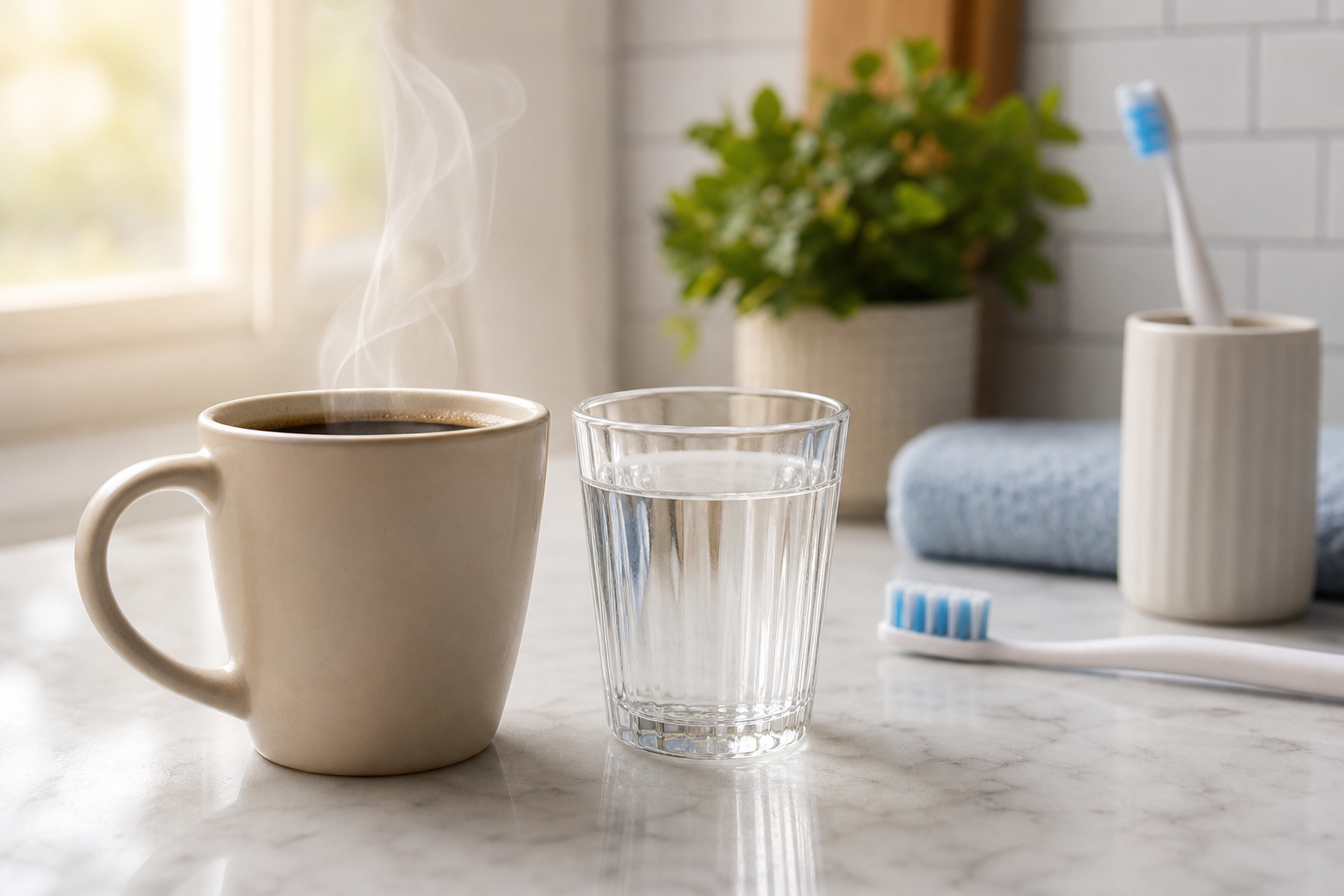
Why coffee can linger
- Coffee has a strong aroma and can leave compounds behind on the tongue and soft tissues.
- Caffeine may contribute to dry-mouth feelings for some people, especially if water intake is low.
- Sweetened coffee drinks add sugar exposure, which is another reason to keep a steady oral routine.
A coffee-friendly routine
- Drink water alongside coffee when possible.
- Avoid brushing aggressively right after acidic drinks; gentle rinsing and normal timing are usually more comfortable.
- Keep regular brushing, between-teeth cleaning, and checkups as the foundation.
Coffee and dry-mouth feelings
Coffee can leave a strong taste and aroma, and some people notice that their mouth feels drier after drinking it. That dry feeling can make breath seem less fresh, especially when coffee is sipped slowly over a long period.
Sweetened coffee drinks can also add repeated sugar exposure. That does not mean coffee has to disappear, but it does make water and routine hygiene more important.
A realistic coffee routine
Try drinking water alongside coffee or after finishing it. This is simple, low effort, and often enough to make the mouth feel cleaner.
If you use creamers or sweeteners, consider whether you are sipping for hours. Finishing coffee within a more defined window may be easier on the mouth than constant sipping.
When coffee is not the only factor
If breath or dryness continues all day, coffee may only be one piece of the picture. Medications, mouth breathing, hydration, gum health, and missed dental care can all contribute.
A dentist can help identify whether there are signs of buildup, gum irritation, or other concerns that need attention.
How this fits into a normal routine
A good routine should feel calm and repeatable. For most adults, that means brushing twice daily, cleaning between teeth, drinking water regularly, and keeping regular dental visits on the calendar.
Oral wellness products can be reviewed as optional support, especially when they focus on routine fit and avoid dramatic promises. Results and experiences vary, and any product should sit alongside professional care rather than in place of it.
If you are unsure whether a habit or product makes sense for your mouth, bring it up at your next dental visit. A short conversation with a dentist or hygienist can prevent a lot of guesswork.
Some readers also explore oral wellness products as part of a daily routine. Keep the focus on brushing, flossing, hydration, checkups, and realistic expectations.