
Bad breath can feel personal, but it is also very common. Food choices, dry mouth, tongue coating, tobacco use, and dental concerns can all play a role.
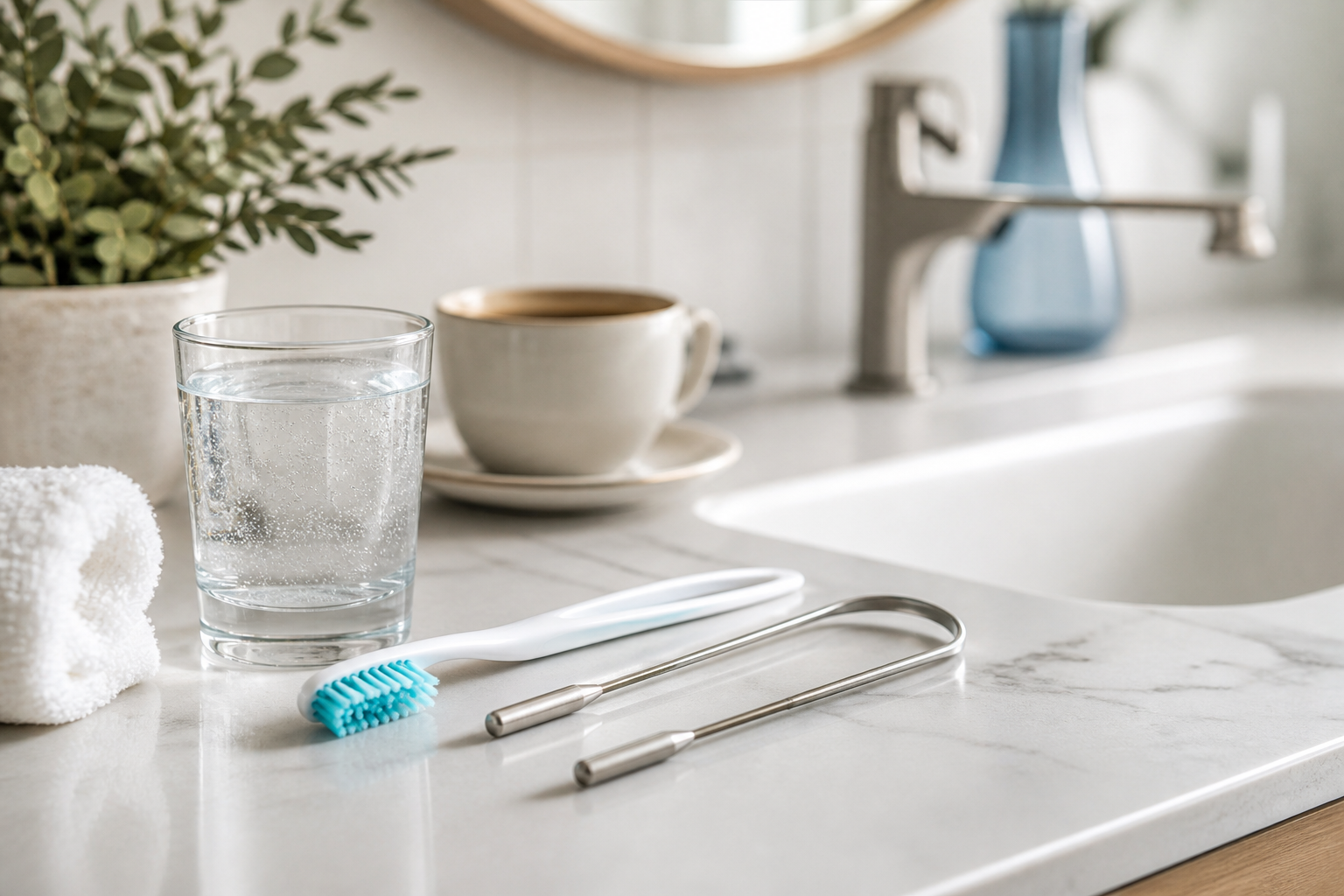
Everyday factors
- Strong-smelling foods, coffee, alcohol, and dry snacks can temporarily affect breath.
- A dry mouth can make breath feel less fresh because saliva helps rinse the mouth naturally.
- Tongue buildup and missed between-teeth cleaning are common routine-related factors.
When to ask a dentist
If breath changes are persistent, new, or paired with bleeding, pain, swelling, or a bad taste, it is worth getting a dental evaluation.
Wellness products can be part of a routine, but they should not be used to cover symptoms that need professional guidance.
How to think about breath changes
Breath can change for ordinary reasons, and that is why it helps to look at patterns instead of assuming one cause. A strong-smelling lunch, a dry night of sleep, a skipped flossing session, or a busy day with very little water can all affect how fresh the mouth feels.
It is also useful to remember that breath is not only about odor. Many people describe a coated feeling, a dry feeling, or a stale taste before they notice anything else. Those clues can point back to routine, hydration, diet, or the need for a dental checkup.
A practical daily reset
A simple reset usually starts with water, gentle brushing, between-teeth cleaning, and light tongue cleaning. None of these steps need to be aggressive. The goal is steady removal of buildup and a mouth that feels clean without irritation.
If you use mints, gum, rinses, or oral wellness products, treat them as support tools. They may help the mouth feel fresher for a time, but they do not replace removing buildup or getting professional guidance when symptoms persist.
When patterns matter
If breath concerns keep returning despite a consistent routine, write down when they happen. Morning only, after coffee, after certain foods, during dry weather, or alongside gum tenderness are all different patterns.
A dentist can help sort out whether the issue is routine-related, dryness-related, gum-related, or something that needs a closer look.
How this fits into a normal routine
A good routine should feel calm and repeatable. For most adults, that means brushing twice daily, cleaning between teeth, drinking water regularly, and keeping regular dental visits on the calendar.
Oral wellness products can be reviewed as optional support, especially when they focus on routine fit and avoid dramatic promises. Results and experiences vary, and any product should sit alongside professional care rather than in place of it.
If you are unsure whether a habit or product makes sense for your mouth, bring it up at your next dental visit. A short conversation with a dentist or hygienist can prevent a lot of guesswork.
Some readers also explore oral wellness products as part of a daily routine. Keep the focus on brushing, flossing, hydration, checkups, and realistic expectations.