
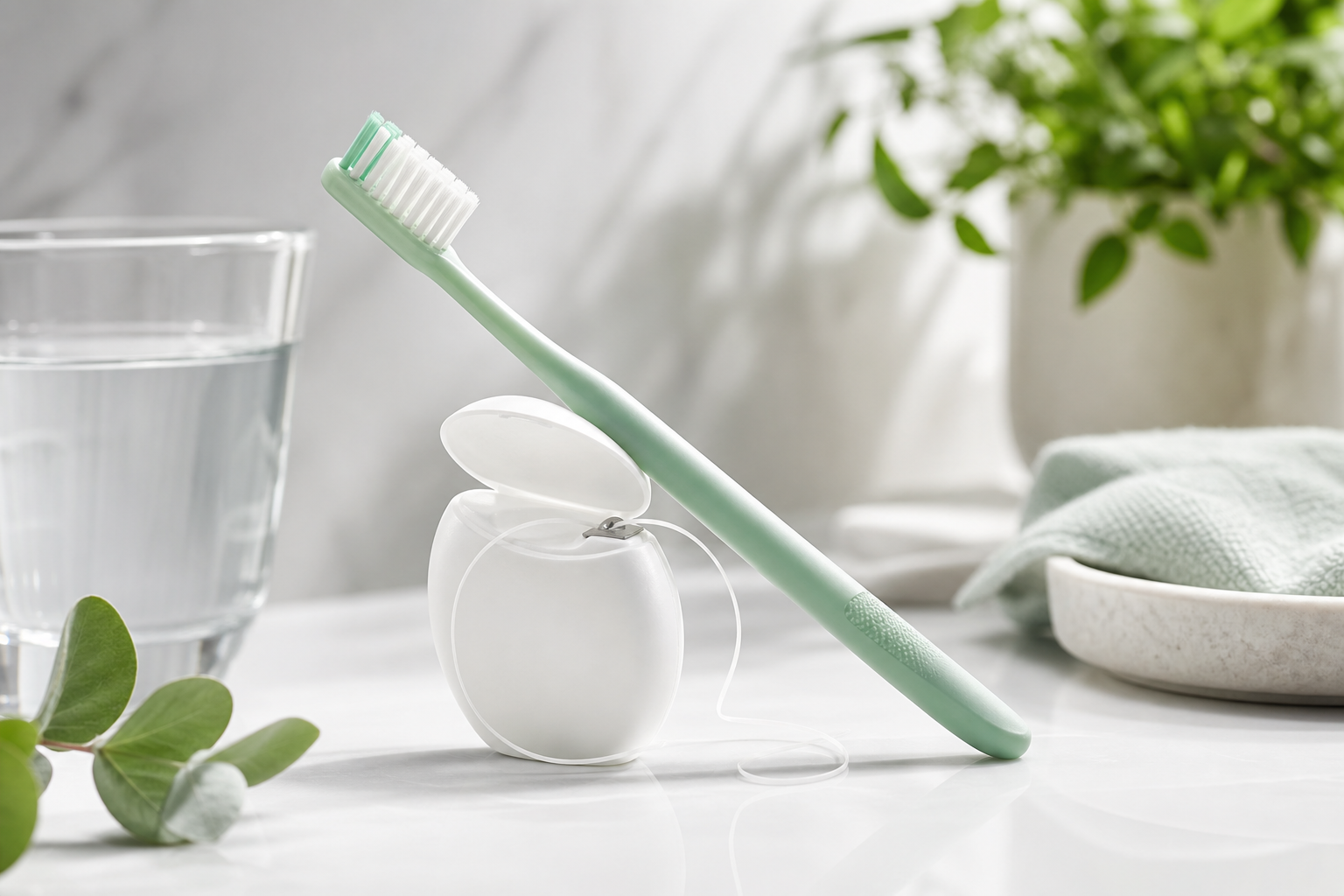
Brushing and flossing do different jobs. A toothbrush cleans broad tooth surfaces, while floss or interdental tools help clean the spaces between teeth.
Why brushing is not enough by itself
- Toothbrush bristles may not fully reach tight spaces between teeth.
- Between-teeth cleaning helps remove debris and buildup in areas that can affect freshness and gum comfort.
- Your dentist can suggest floss, picks, interdental brushes, or water flossers based on your mouth.
Make it sustainable
- Choose tools you will actually use.
- Gentle daily consistency is better than occasional aggressive cleaning.
- If flossing causes repeated bleeding or pain, ask a dental professional for guidance.
They solve different problems
Brushing is excellent for broad tooth surfaces, but toothbrush bristles do not fully clean tight spaces between teeth.
Floss, interdental brushes, or other between-teeth tools are meant to reach those spaces. That is why the two habits work together.
Technique beats force
Brushing harder is not the same as brushing better. Gentle pressure and complete coverage are usually more useful than scrubbing aggressively.
The same goes for flossing. Snapping floss into the gums can irritate tissue, while gentle movement is easier to maintain.
Choose tools you will use
Some people prefer string floss. Others do better with floss picks, interdental brushes, or water flossers. The best tool is often the one you can use consistently and correctly.
A dental professional can help match tools to your teeth and gums.
How this fits into a normal routine
A good routine should feel calm and repeatable. For most adults, that means brushing twice daily, cleaning between teeth, drinking water regularly, and keeping regular dental visits on the calendar.
Oral wellness products can be reviewed as optional support, especially when they focus on routine fit and avoid dramatic promises. Results and experiences vary, and any product should sit alongside professional care rather than in place of it.
If you are unsure whether a habit or product makes sense for your mouth, bring it up at your next dental visit. A short conversation with a dentist or hygienist can prevent a lot of guesswork.
Some readers also explore oral wellness products as part of a daily routine. Keep the focus on brushing, flossing, hydration, checkups, and realistic expectations.